
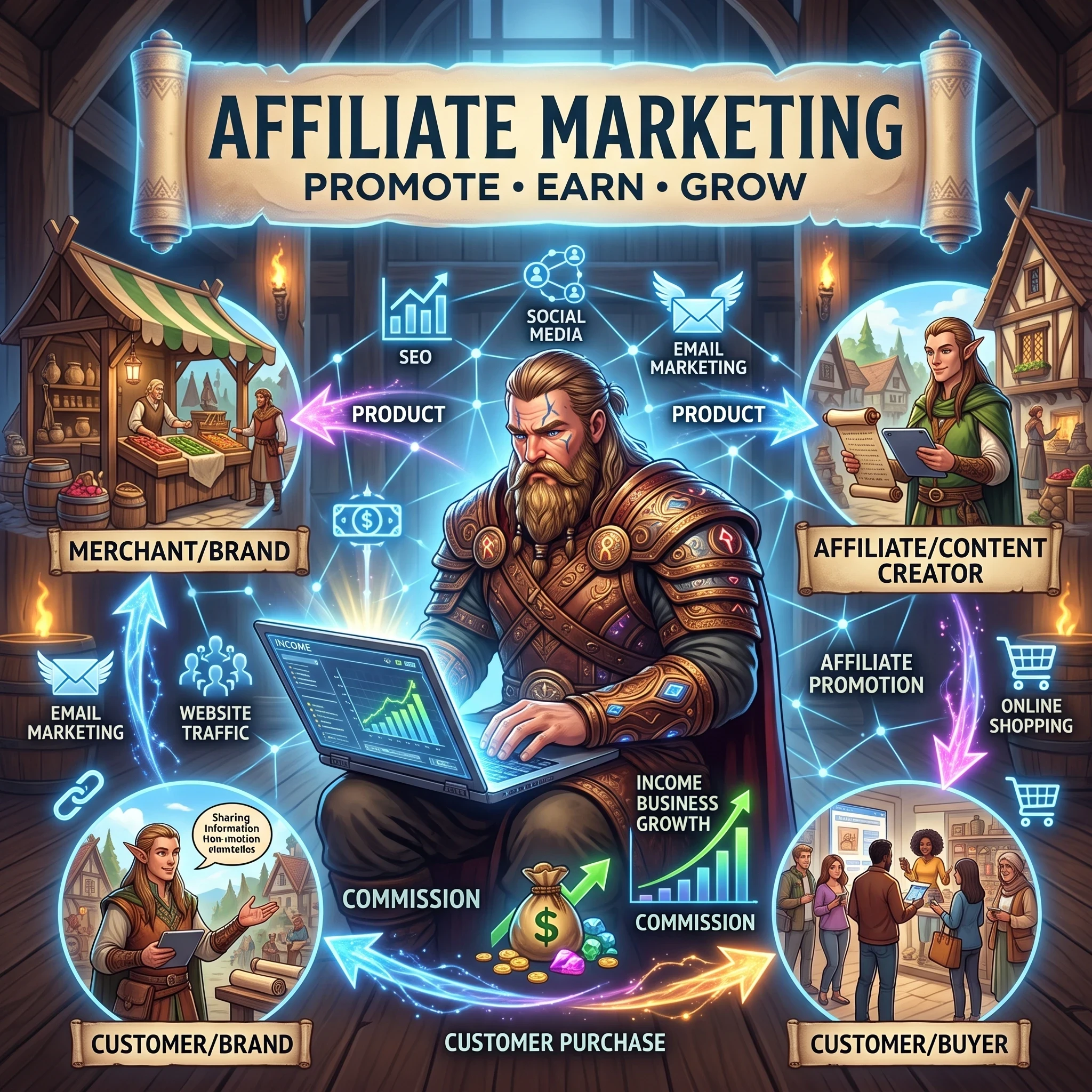
Affiliate marketing might sound a bit technical, but it’s simply promoting someone else’s product and earning a cut from the sales made through your referral. It’s like being the middleman, but without stocking products or handling customer complaints.
Back in the day, affiliate marketing began offline, like door-to-door sales but with more hustle. Fast forward to today, it’s gone digital and transformed how we engage with online shopping, becoming a massive hit in the process.
There are different ways to earn as an affiliate. You have your cost-per-click (CPC) model, where you get paid for clicks you generate, and the cost-per-sale (CPS) method, which is all about earning a commission when a sale happens through your link. It’s a mix-and-match game depending on what aligns with your strategy.
In this game, there are three big players: merchants, affiliates, and networks. Merchants offer the products, affiliates promote them, and networks make sure everyone gets paid. Knowing each player’s role is crucial to finding your fit.
Why are folks gravitating towards affiliate marketing? It’s the freedom, baby! You get to decide your hours, ramp up your operations, scale your business, and watch it grow. It’s a flexible route to financial independence if you’re ready to hustle.
Affiliate marketing isn’t in a bubble. It works seamlessly with other digital marketing strategies like SEO, email marketing, and social media to up your game. You can integrate these strategies to create a solid ecosystem, boosting your affiliate sales like a pro.
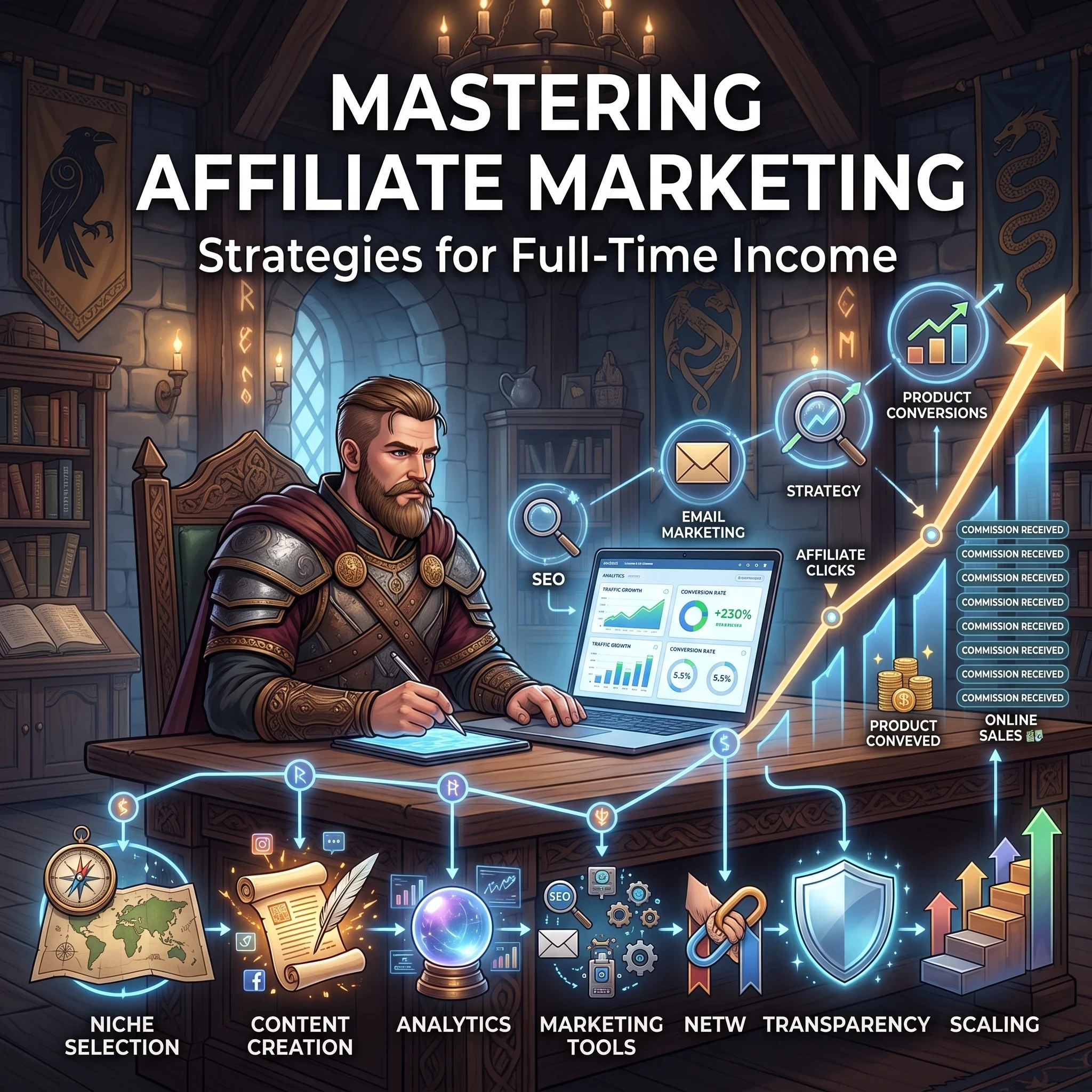
Mastering the Craft: Strategies for Full-time Income in Affiliate Marketing
Earning a full-time income from affiliate marketing starts with picking the right niche. It’s crucial to dig into areas you’re passionate about that also have a solid audience interest and demand. This balance helps you remain genuine while drawing in people who are ready to buy.
Content is king. To succeed as an affiliate marketer, your content has to resonate with your audience. This means creating engaging blog posts, reviews, or tutorials that don’t just talk about a product but also show how it solves a problem or enhances the life of your reader. Authentic content builds trust, and trust equals sales.
Once you’re rolling, it’s essential to keep an eye on how things are performing. Using analytics tools, you can see which strategies are relaying those clicks into sales and which aren’t quite cutting it. Keep testing and tweaking. It’s a constant cycle of learning and improving.
Equip yourself with the right tools. There are plenty of plugins and software out there that make managing your affiliate business a breeze. Email marketing platforms, SEO optimization software, and automation tools can help you become more efficient and effective.
The affiliate marketing space isn’t a lone wolf world. Building connections with other marketers can open up opportunities like partnerships, guest blogging, and even mentorships. Sharing experiences and tips can propel you forward faster than going it alone.
Staying honest with your audience through ethical practices is a non-negotiable. Always disclose your affiliate relationships. A trusting audience is your most valuable asset, and transparency solidifies that trust.
When you’re ready to take things up a notch, it’s time to think about scaling. Automate the repetitive tasks, diversify the products you promote, and perhaps bring in some helping hands to handle the load. The more you can streamline, the more you can focus on growing your income.





The breakdown on expectations versus reality with affiliate marketing is such a breath of fresh air compared to the usual “get rich overnight” hype on social media. Building up recurring passive revenue definitely takes way more upfront grind and testing than most beginners realize, especially when it comes to SEO and audience trust. I’m definitely bookmarking this to share with a few fellow self-employed friends who keep asking if they should pivot into affiliate streams.
Thank you, Leah! I really appreciate your thoughtful comment. You’re absolutely right; affiliate marketing takes patience, testing, SEO, and building trust with your audience. I’m glad the post gave you a realistic perspective, and I hope it helps your friends too!