Most affiliates accept the rate printed on the signup page and never raise it. That rate was set for a new affiliate the program knows nothing about. Once you have months of steady sales, you are no longer that affiliate, and your own dashboard can show it.
This article walks through the whole process inside a program you already promote: which numbers to pull, how to judge whether you have leverage yet, who to contact, what to write, and what to do with each possible answer. The aim is to raise your tier with a brand you already work with, so it assumes you are staying in the program.
Why a higher commission rate is usually there for the asking, and who decides
A published commission rate is a default. Many programs have room to place proven affiliates on a higher rate, and some publish tiers that rise with volume. Others have no tiers at all and leave the decision to a person. You will not know which applies to you until you read the program terms and ask.
The person who decides is usually an affiliate manager or partnerships manager. In a network-hosted program, that may be someone at the brand, or at an agency the brand hired to run the program. Their job is to bring in sales from affiliates who send buyers. A request that shows you already do that is a normal part of their work, not an imposition.
A higher rate costs the brand more on each sale, so your case rests on something other than wanting more. It rests on what you deliver: sales the brand keeps, from customers who stay. That is what the next section helps you document.
Which of your numbers give you grounds to ask
Pull the last 90 days from the program’s own dashboard, since the manager can check those figures against their records. Use these numbers:
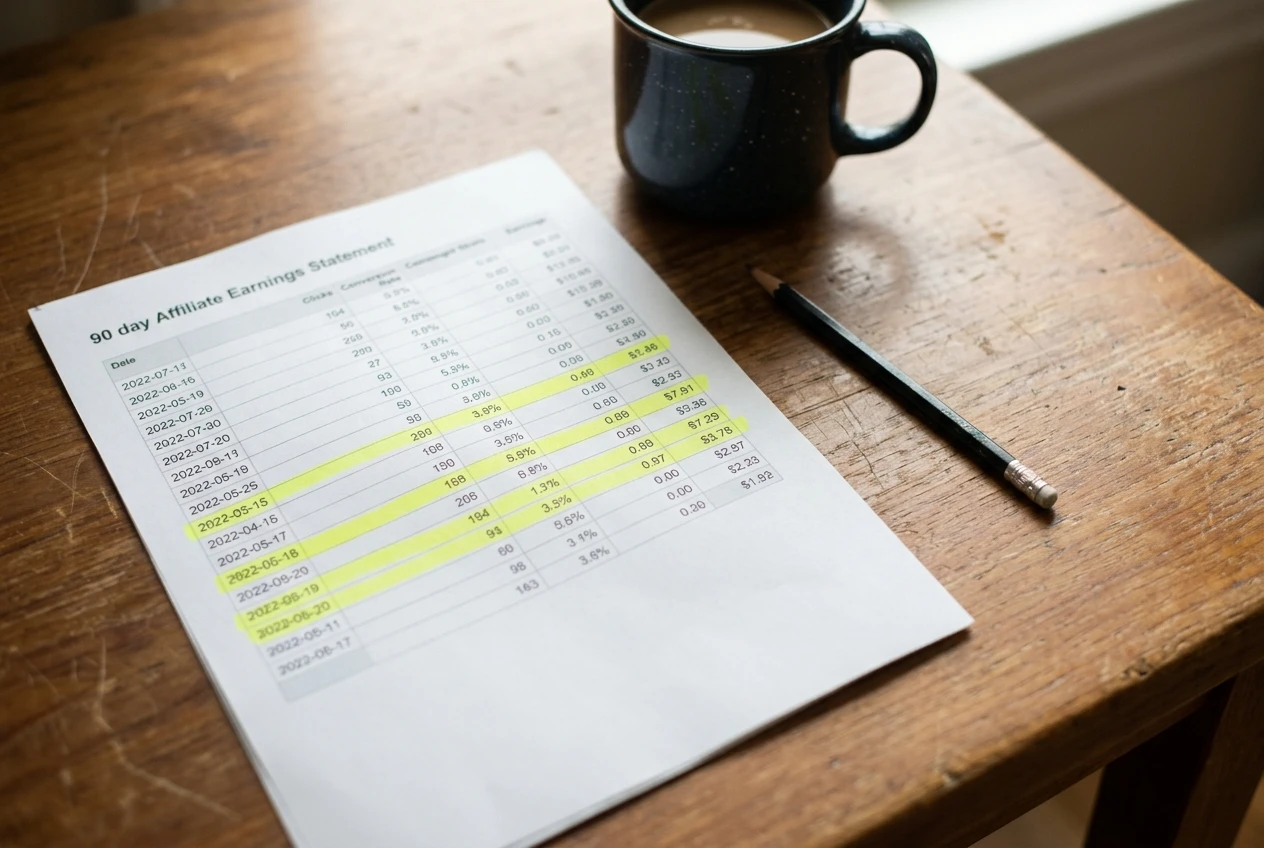
- Approved or locked sales and commission. Leave out pending amounts, which can still reverse.
- Order count. A rate backed by many orders is harder to dismiss than one backed by a couple of large ones.
- Reversal or refund rate. A low rate tells the manager your buyers are happy with what they bought.
- Conversion rate and earnings per click, if the dashboard reports them. These show your traffic is well matched to the offer.
- Average order value. If it is higher than the program average, the manager will know, so mention it.
- Month-by-month trend. Three steady or rising months are stronger evidence than a single total.
- New customer share, if the program tracks it. Brands tend to value new customers over returning ones.
Add context the dashboard cannot show: which pages send the sales, what kind of reader lands on them, and roughly how much traffic those pages get. If you are unsure which of your numbers carry weight and which only look good, the affiliate dashboard audit covers that distinction in detail.
How to tell whether you have leverage yet or should wait
Leverage comes from a pattern the manager can trust. Check your data against these signs.
You probably have leverage when:
- Sales have come in across at least three consecutive months, not in one burst.
- The order count is large enough that a handful of sales would not change your conversion rate much.
- Reversals are low and not rising.
- The trend is flat or growing, not declining.
- You could move readers to a competing program with a similar product, even if you would rather not.
You should probably wait when:

- One month produced most of your commission, perhaps from a promotion or a single viral page.
- You have only a few orders, so the numbers could be luck.
- Reversals are high or climbing, which the manager will notice immediately.
- The program recently changed its terms or rates, and the manager is still dealing with the fallout.
Waiting costs little. Another quarter of clean data makes the request stronger, and you lose only the difference in commission over that time. Asking too early and getting a no is more costly, because it sets the manager’s first impression of your numbers.
Timing also matters inside the program. A request that arrives after a strong quarter, or ahead of a seasonal peak the brand cares about, lands better than one sent during a dispute over payments or a policy change.
Picking the right program and the right person to contact
You may promote several programs, but start with one. Choose the program where a higher rate would be worth the most: the one with the largest approved commission over the last 90 days. A two-point increase on a small program changes little. The same increase on your top earner changes your month.
A program where you could credibly shift your content to a competitor also gives you more standing, because the manager knows your readers are not locked in.
To find the contact:
- Check the dashboard for an assigned manager’s name or a messaging tool.
- Look through the welcome emails and any program newsletters for a reply-to address.
- If you joined through a network, use the network’s messaging system. It keeps a record of the exchange and reaches the right person.
- If none of these gives you a name, look for a partnerships or affiliate contact page on the brand’s own site.
Read the program terms before you write. Some state that rates are fixed, or that tiers are set by a formula. If there is a published tier structure, your ask becomes a question about where you sit in it, which is easier for the manager to answer.
The email that gets a reply: what to put in and what to leave out
Keep the email short enough to read in under a minute. The manager should be able to see who you are, what you have delivered and what you want without scrolling.
Include these parts, in this order:
- A subject line that says what it is. For example: “Commission tier review for [your site name].” Use the real name of your site.
- Who you are. Your site address and your affiliate ID, so the manager can open your account.
- Your 90-day results. Approved sales, order count, reversal rate and the trend, taken straight from the dashboard.
- What you plan to do next. Name only what you will actually do, such as updating a review or adding the product to a comparison page.
- A specific ask. Name a rate or a tier. A vague request for “a better rate” forces the manager to invent an answer.
- An open door. Say you are glad to talk through other options if the rate itself cannot move.
Here is a sample using example figures only, so replace them with your own:
Subject: Commission review for my site
Hi Dana,
I run a site reviewing home coffee equipment and have been in your program for about a year (affiliate ID 4471). Over the last 90 days I sent 142 approved orders, with a reversal rate under 3 percent, and sales rose in each of the three months.
Over the next quarter I am updating my two comparison pages and adding your product to a new buying guide. Given the volume, I would like to ask whether I could move to a rate of 12 percent, up from the current 8. If that is not possible, I would be glad to hear what else might be available for an affiliate at this level.
Thanks for your time, Sam
Leave out anything that works against you: threats to leave, claims about what competitors pay unless you can prove them, complaints about your income, and long accounts of your history. Skip reasons the brand cannot act on, such as your costs or what you need the money for. The email is a business case, and the numbers make it.
Negotiating beyond the headline percentage: bonuses, cookie windows, and exclusive offers
The commission rate is only one of the terms the manager may be able to change. If the percentage is fixed, ask about the others, and pick the ones that match what your data shows.

- Cookie window. If your readers research for a while before buying, a longer window captures sales you currently lose. Check how long your buyers take between click and purchase before you ask.
- Performance bonuses. A flat bonus when you reach a set number of sales in a month rewards the volume you already send.
- Exclusive offers. A discount code or bundle for your readers can raise your conversion rate, and the brand can track it back to you.
- Early access. Getting new products or launches before the public lets you publish first.
- Recurring commission. For subscription products, ask whether commission continues on renewals and at what rate. Our guide to building recurring affiliate income covers why that matters over time.
- Payment terms. A lower payout threshold or a faster schedule has real value if you are waiting on balances.
- Custom landing pages or creative. A page made for your audience can lift conversions without any change to the rate.
Offering something in return makes these requests easier to grant. A manager who cannot raise the percentage may still approve a bonus or an exclusive code, because those can be structured around a result.
What to do with a counteroffer, a delay or a flat no
A yes. Ask for the new terms in writing, including the effective date, whether the rate applies to sales already made, and any conditions for keeping it. Then check your dashboard after the next payment cycle to confirm the new rate is being applied.
A counteroffer. Do the arithmetic before you reply. Multiply your last 90 days of approved sales by the offered rate and by your current rate, and compare the two in money. Then you can see what the gap is worth. If the offer falls short, ask what volume or conditions would move you to the rate you asked for, and propose a date to review. A counteroffer with a clear path to the next step is often a good result.

A delay. Managers often need approval from someone else. Ask when you should expect an answer, and follow up once after that date has passed. Keep the follow-up short and polite, with your original email below it so the thread has the figures in it.
A flat no. Reply with thanks, then ask two questions: what would change the answer, and when would it make sense to ask again. Those answers give you a target. A no tells you nothing about the quality of your site; many programs simply have fixed terms. If you are sending large volume and the answer stays no, it may be worth reading about when to leave the network and ask a brand for a private deal. Until then, you can shift more of your content toward programs that pay better for the same effort.
Keeping the new rate: how to protect the relationship after you win
A higher rate is usually tied to continued performance, so the same habits that earned it protect it.
Keep your reversal rate low by recommending the product to readers it suits, and by being straight about its limits in your reviews. Follow the program’s terms on branding, coupon use and ad placement, because a violation can cost you more than the rate increase gained you. Keep your disclosures clear as well, so the brand has no reason to worry about its name appearing on your pages.
Tell the manager when something useful happens, such as a new page that ranks well or a seasonal push you are planning. A short note every few months keeps your name in front of them for the right reasons. Do not use these notes to ask for more each time.
Put a review date on your calendar, about six months after the change. When it comes, pull the same set of numbers, compare them with the figures from your first request, and decide whether another conversation is justified.
Your next step
Pull the last 90 days of data for your top-earning program and draft your ask using the structure above. Then run your figures through the affiliate dashboard audit to check that you are quoting the numbers that matter before you send anything.